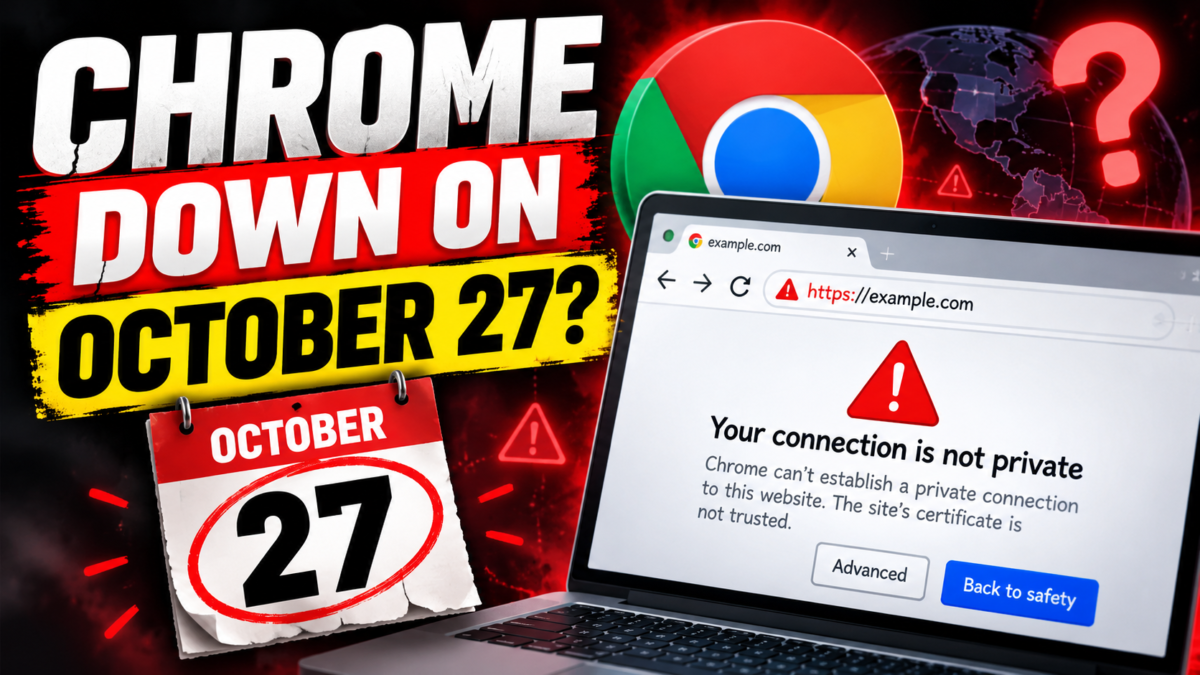

Imagine you’re halfway through paying a bill when Chrome suddenly throws a security warning across the screen. The website looks normal. Your internet is working. You haven’t clicked anything suspicious. So why is your browser suddenly refusing to trust a connection you’ve used before?
That’s the question behind Google’s Chrome security certificate change scheduled for October 27, 2026. Google plans to remove a specific root certificate, emSign ECC Root CA – G3, from the Chrome Root Store after a security incident involving weak keys in eight eMudhra intermediate certificate authorities. Some legitimate websites using certificate chains linked to that root could stop working properly in Chrome.
Before you panic: this is not a warning that every website will break or that Chrome itself is going offline. The change is targeted. But the story behind it is a reminder that a tiny cryptographic mistake, buried deep inside the web’s trust system, can trigger action across the browser ecosystem.
Here’s what happened, why Google is making the change, and what website owners and everyday users should actually do.
First, What Does a Website Certificate Actually Do?
When you visit a website using HTTPS, your browser doesn’t simply switch on encryption and hope for the best. It also checks the website’s digital certificate to help confirm that it is talking to the right server.
Think of the certificate as an ID card, with a chain of trust behind it. A website presents its certificate; the browser checks who issued it and whether that issuer leads back to a certificate authority the browser trusts. Root certificates sit near the top of this chain, while intermediate certificates sit below them and can issue certificates for websites.
Browsers maintain their own lists of trusted root certificates. Those lists are not permanent. When a browser maker finds a serious problem with a certificate authority or its keys, it can block affected certificates or remove a root from its trust store.
That’s why a Chrome security certificate change can matter even when a website is still online. A Chrome security certificate warning is the browser’s way of saying it cannot verify the connection as expected. If Chrome no longer trusts the certificate chain presented by a site, it may refuse the connection or display a warning. The server hasn’t necessarily been hacked; the browser’s trust decision has changed.
The eMudhra Incident: Eight Weak Keys, One Big Trust Problem
On October 17, a security researcher reported that private keys associated with eight eMudhra intermediate certificate authorities could be recovered because they had been generated with insufficient randomness. In simple terms, the keys were far easier to work out than cryptographic keys are supposed to be.
That matters because a certificate authority is part of the system browsers rely on to decide which websites to trust. If someone can recover a trusted issuing key, they may be able to create fraudulent certificates that impersonate legitimate websites. Depending on the situation, that could open the door to convincing fake sites or interception attempts.
But there’s an important distinction between a possible risk and confirmed abuse. Google says no TLS certificates chaining to the six affected TLS intermediates were recorded in Certificate Transparency logs before its blocking action. eMudhra has also said the affected intermediates had not issued end-user certificates. Public disclosures have not established confirmed malicious exploitation of the affected keys.
eMudhra says a flaw in its key-generation process created weak keys alongside the intended strong ones. It revoked the eight affected intermediates and said its Indian digital-signature certificate and eSign services use separate infrastructure and were not affected by this incident.
Google responded by blocking the affected intermediate keys. It then announced a broader step: removing the related emSign ECC Root CA – G3 from the Chrome Root Store. The goal is to protect systems that rely on the root store but may not receive or enforce the same intermediate-certificate revocation updates.
For the primary-source version, read Google’s explanation of its Chrome and Android protections and eMudhra’s incident update.
What Changes on October 27?
Google says the removal of emSign ECC Root CA – G3 is expected to reach devices that rely on the Chrome Root Store on Tuesday morning, October 27, Pacific Daylight Time. The change may arrive earlier in Chrome Beta and Chrome Canary.
The detail that matters most is whether a website’s active TLS certificate chain depends on this specific root. The Chrome security certificate change is about that trust chain, not about HTTPS websites in general. A site isn’t affected simply because it uses HTTPS, runs on WordPress, or has heard of eMudhra. The certificate chain itself is what matters.
If a website uses the affected chain and hasn’t moved to a replacement certificate, Chrome may no longer trust it after the change. Google has told affected website operators to acquire and install a new TLS certificate from another public-key infrastructure hierarchy included in the Chrome Root Store. eMudhra says it is working with impacted subscribers on replacement certificates and migration options.
So the headline isn’t “Chrome will break the internet.” It’s more specific: some sites may encounter certificate errors if their owners haven’t migrated away from the affected trust path. For most users, the change may pass without them noticing anything at all.
Could a Website You Use Stop Loading?
Possibly, but only if its certificate chain depends on the affected root and hasn’t been replaced. Google has warned that some legitimate certificates chaining to the root will cease to function in Chrome. It has not said that a large share of the web will break, and there is no evidence that every eMudhra customer or every WordPress website is affected.
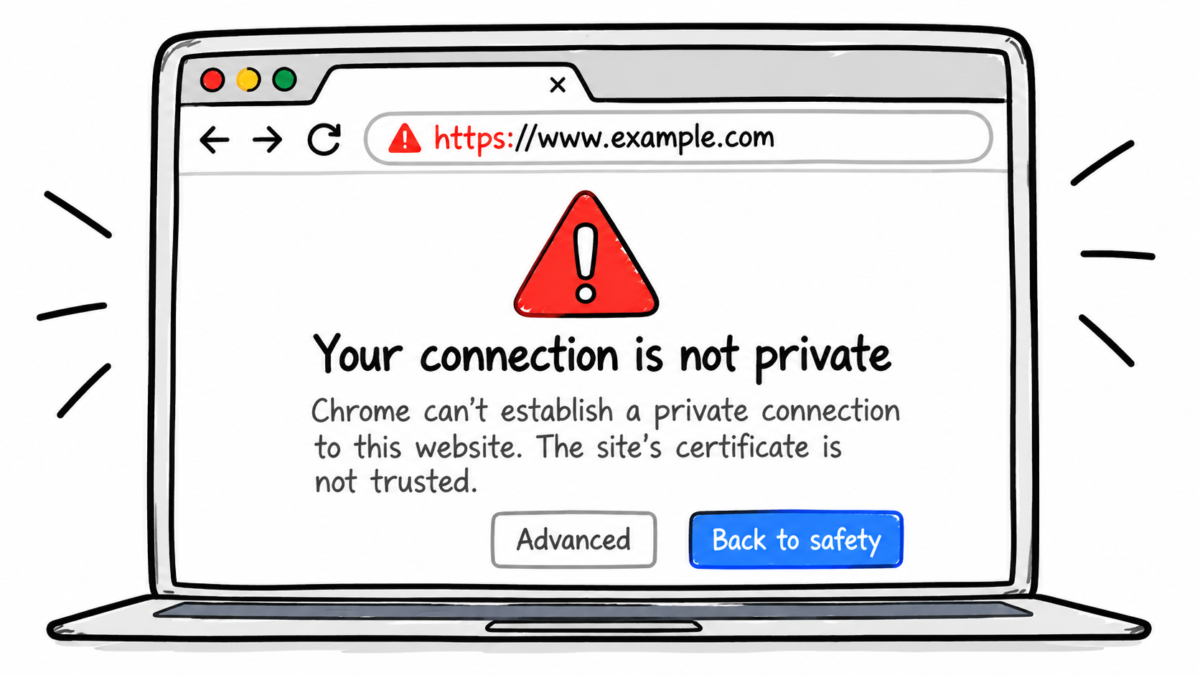
If you do hit an HTTPS certificate warning, it may look alarming. A Chrome security certificate warning can appear even when a site owner is working to fix the problem: a page won’t load, or Chrome tells you it can’t establish a private connection. Don’t click through the warning just to get to the page. Check the web address, try again later, and look for an official update from the service provider.
If it’s a bank, payment service or work portal, use its official app or contact channel rather than following links in unexpected messages. A certificate warning doesn’t automatically mean the site is malicious, but it does mean the browser can’t verify the connection as expected. That’s a warning worth respecting.
It’s also worth keeping the context straight: eMudhra says the affected intermediates had not issued end-user certificates, while Google’s root removal is a precaution to protect a broader set of systems. This is a targeted trust-store change, not a universal failure of HTTPS.
What Website Owners Should Do Right Now
If you manage a website or server, don’t start replacing certificates at random. First, find out whether your active certificate chain uses emSign ECC Root CA – G3. Your hosting provider or certificate issuer can help confirm this if you’re unsure.
- Check the certificate chain. Review the issuer and root chain for each public-facing website and service.
- Contact your host or certificate provider. Ask whether any active certificate depends on the affected root.
- Replace affected certificates. If your chain is affected, follow the provider’s instructions to install a certificate from another trusted hierarchy supported by Chrome.
- Test the change. Check the site in a current version of Chrome and watch for TLS or certificate-validation errors.
- Check more than the homepage. Subdomains, APIs, customer portals and other services may use separate certificates.
This is where good certificate management pays off. Businesses often have certificates spread across hosting dashboards, cloud platforms, load balancers and older services. A certificate nobody remembers setting up can still cause an outage when browser trust rules change.
India’s CERT-In has also published an advisory on the eMudhra intermediate certificate incident. It recommends reviewing certificate dependencies, replacing affected certificates where required, updating trust stores and never disabling certificate validation to get around warnings. Read the CERT-In advisory if you manage a website, application or business network.
Does This Mean Chrome Is Becoming Less Safe?
It may seem strange that removing a trusted root could make a legitimate website fail. But trust stores are not permanent guest lists. Browser makers are expected to change them when evidence shows that a certificate authority or its keys no longer meet security requirements.
In this case, the point of the Chrome Root Store change is to reduce the chance that software relying on that store will trust certificates connected to the affected hierarchy. That can create work for sites that haven’t migrated, but leaving a risky trust path in place would create a different problem.
HTTPS is important, but it isn’t a magic shield. It helps encrypt data in transit and verify a server’s identity through a certificate chain. It doesn’t prove that a website is honest, that its software has no bugs, or that a user can’t be tricked by a convincing scam.
We’ve looked at another side of digital security in our coverage of AI agents exploring internet security boundaries and NVIDIA’s approach to AI-agent safeguards. This story is a different kind of warning: even when software is behaving normally, the trust infrastructure beneath it has to be maintained.
The Bigger Story: The Internet Runs on Trust
Most of the time, the internet feels effortless. You type a web address, tap a link and expect the page to appear. Behind that tiny action sits a system of certificate issuers, cryptographic keys, browser policies and server configurations that all have to work together.
The eMudhra incident shows how a mistake deep inside that system can trigger action across browsers and software. The weak keys were associated with intermediate certificate authorities, but the response reaches into browser trust stores because a single weak link can undermine confidence in the chain above it.
It’s also a reminder that security isn’t just about inventing stronger encryption. It’s about generating keys correctly, auditing procedures, spotting mistakes and replacing certificates quickly when trust changes. The same principle applies to the physical infrastructure behind the web, including the undersea cables that carry data between continents.
So, Should You Worry?
For most everyday users, there’s no reason to assume your favourite websites will suddenly stop working. Google’s announcement is specific: some legitimate certificates chaining to emSign ECC Root CA – G3 may stop working in Chrome after the root is removed. The change follows the discovery of weak keys in eight eMudhra intermediate certificate authorities.
If you’re browsing normally, keep Chrome updated and never bypass a certificate warning just to make a page load. If a Chrome security certificate warning appears, use the website’s official support channel instead of ignoring it. If you manage a website, check the certificate chain now and follow your provider’s guidance if it relies on the affected root.
The internet probably won’t announce this change with a dramatic countdown or a global blackout. For most people, it may pass unnoticed. But for the website owners who need to replace a certificate, October 27 is a reminder that the web’s quietest trust mechanisms can suddenly become mission-critical.